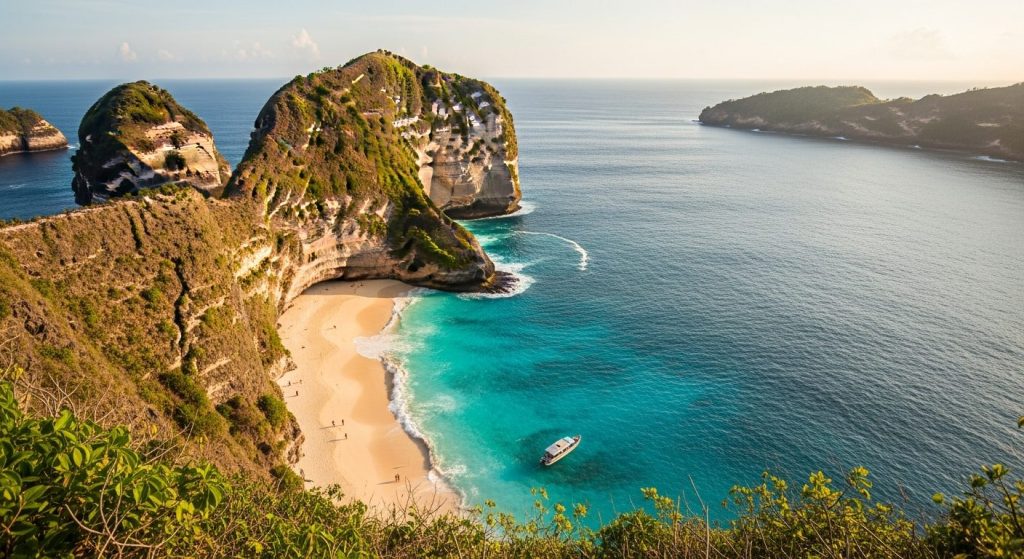
Planning a Nusa Penida east tour means setting your sights on some of the island’s most iconic landscapes: the dramatic cliffs of Diamond Beach, the calm turquoise waters of Atuh Beach, and the unique cultural experience of Goa Giri Putri Temple. As your Nusa Penida Travel Editor, I’ve personally road-tested every stop on the east coast loop to help you navigate the distances, road conditions, and best times for photos, ensuring you get the most from your day.
A Nusa Penida east tour focuses on the dramatic, undeveloped eastern coastline, where towering limestone cliffs meet brilliant blue ocean. It’s a journey into striking natural beauty and cultural sites, different from the west’s more accessible beaches and iconic Kelingking viewpoint. If you’re here for postcard-perfect vistas, challenging treks, and spiritual exploration, the east offers a memorable path.
What is the Nusa Penida East Tour? An Overview
The typical Nusa Penida east tour is a full-day exploration, usually starting early in the morning from your accommodation. Most visitors begin with a fast boat from Sanur, Bali, arriving at Nusa Penida’s Buyuk, Banjar Nyuh, or Toya Pakeh port. From there, a local driver and car are essential for island’s roads.
The standard east Nusa Penida tour highlights typically include:
- Diamond Beach
- Famous for its white sandy beach, towering diamond-shaped rock formations, and the newly carved stairs offering dramatic views. Requires a descent.
- Atuh Beach
- A calmer, crescent-shaped cove with turquoise water, often visited directly after Diamond Beach due to proximity.
- Molenteng Treehouse (Rumah Pohon) & Thousand Islands Viewpoint Nusa Penida
- Offering panoramic views of the coastline, often confused with or seen alongside the “Thousand Islands” vista.
- Peguyangan Waterfall Nusa Penida
- A challenging trek down a blue-painted staircase to a sacred spring and temple at the base of the cliffs.
- Goa Giri Putri Temple
- A large Hindu temple situated inside a cave, requiring a crawl through a narrow opening to enter.
The sequence of stops can vary slightly based on your driver’s strategy to avoid crowds, but the general direction moves along the eastern coast. Roads, while improving, can still be bumpy and narrow in places, so comfortable transport and an experienced local driver are key.
East vs. West Nusa Penida Tour: Which is Right for You?
Deciding between an east Nusa Penida tour and a west Nusa Penida tour often comes down to what kind of experience you’re seeking. Both sides of the island offer incredible sights, but their character is distinct. Here’s a quick comparison to help you choose:
| Feature | East Nusa Penida Tour | West Nusa Penida Tour |
|---|---|---|
| Primary Attractions | Diamond Beach, Atuh Beach, Molenteng Treehouse, Peguyangan Waterfall, Goa Giri Putri Temple, Thousand Islands Viewpoint. | Kelingking Beach, Broken Beach, Angel’s Billabong, Crystal Bay, Manta Point (snorkeling). |
| Landscape Character | Dramatic, rugged cliffs; secluded coves; cultural sites; challenging treks. | Iconic, often photographed rock formations; natural pools; sunset beaches; marine life focus. |
| Accessibility & Roads | Roads are improving but can still be rough, especially to Peguyangan. Some treks are physically demanding. | Generally better-maintained roads to main sites, but still winding. Some stairs (Kelingking) are demanding. |
| Crowd Levels | Can be crowded at Diamond/Atuh during peak midday, but generally feels a bit less intense than the west. | Kelingking Beach is consistently very crowded. Broken Beach/Angel’s Billabong also see high numbers. |
| Swimming Opportunities | Atuh Beach (often calm enough), Peguyangan (sacred spring, not beach swimming). Diamond Beach has a swimming prohibition. | Crystal Bay (popular for swimming/snorkeling), Manta Point (snorkeling only), Angel’s Billabong (tide-dependent, sometimes prohibited). |
| Cultural Focus | Stronger focus with Goa Giri Putri Temple and Peguyangan’s sacred spring. | Primarily natural geological formations. |
| Physical Demand | Moderate to High (Diamond stairs, Peguyangan trek). | Moderate (Kelingking stairs, walking around Broken Beach/Angel’s Billabong). |
| Best For | Adventurers, photographers, those seeking cultural insight, willing to trek. | Iconic photo opportunities, easier beach access (Crystal Bay), marine life enthusiasts. |
If you only have one day, choosing between east and west is essential. If you have two days, combining the best of both sides into a Nusa Penida east and west day tour is often possible, staying overnight on the island. This allows for a more relaxed pace and avoids rushing.
The East Nusa Penida Tour Highlights: What You’ll See and Do
Let’s break down the key stops on an east Nusa Penida tour. Each offers a unique experience, from dramatic cliffs to spiritual journeys.
Diamond Beach Nusa Penida: Iconic Views and Important Safety Notes
Diamond Beach is arguably the most famous stop on the east Nusa Penida tour, and for good reason. From the viewpoint above, the sight of the white sand, the clear blue water, and the distinct diamond-shaped rock formations offshore is truly captivating. The beach became accessible to the public relatively recently, after locals carved a set of steep, winding stairs into the limestone cliff face.
**Getting Down to Diamond Beach:** The stairs are a major part of the experience. They are well-maintained but very steep and narrow in sections. There are ropes to hold onto, but a good level of fitness and sturdy footwear are necessary. The descent can take 15-30 minutes, and the ascent often takes longer. Take your time, especially if it’s hot.
**Photo Opportunities:** The top viewpoint offers the classic panoramic shot. For those who make the descent, photos from the beach looking back up at the cliffs are equally impressive. Early morning light is best to avoid harsh shadows and glare.
**Diamond Beach Nusa Penida Swimming Prohibition:** This is crucial. While the water looks inviting, **swimming at Diamond Beach is strictly prohibited and extremely dangerous due to strong currents and powerful waves.** There are usually signs posted, and local operators and lifeguards will advise against entering the water. Do not ignore these warnings. The currents can pull you out to sea, and rescue can be very difficult. Enjoy the view, feel the sand, but stay out of the ocean at Diamond Beach for your safety.
Atuh Beach East Nusa Penida: Turquoise Water and Relaxation
Just a short drive or even a walk (depending on where your driver parks) from Diamond Beach is Atuh Beach. This crescent-shaped cove offers a different vibe entirely. While Diamond is wild and dramatic, Atuh Beach is often calmer, with a more sheltered feel. The Atuh Beach east Nusa Penida turquoise water is genuinely inviting, and swimming here is often possible, depending on the tide and conditions.
**Access to Atuh Beach:** There are two main access points. One involves a similar, but generally less steep, set of stairs down to the beach. The other, if coming from Diamond Beach, might involve a slightly longer walk and a different descent. Confirm the best access with your driver.
**On the Beach:** Atuh Beach usually has a few small warungs (local eateries) selling drinks, snacks, and simple meals. You can rent sun loungers for a small fee. This is a great spot to relax, cool off with a swim (if conditions allow and local advice permits), and enjoy the scenery. The iconic Batu Bolong (hollow rock) formation offshore is a prominent feature.
**Photo Timing:** Similar to Diamond, early morning or late afternoon light is best. Midday sun can be harsh, but the turquoise water still pops.
Molenteng Treehouse (Rumah Pohon) & Thousand Islands Viewpoint Nusa Penida
These two spots are often visited together, as they offer views from the same cliff edge overlooking the “Thousand Islands” panorama. The Molenteng Treehouse (Rumah Pohon) itself is a very simple wooden structure perched on the cliff, gaining fame primarily as a photo spot.
**The View:** The “Thousand Islands Viewpoint Nusa Penida” is the main draw here. It’s not actually a thousand islands, but rather a collection of small, rocky islets dotted along the coast below, creating a unique and picturesque seascape. The views are expansive, taking in the dramatic coastline and the distant ocean.
**Photo Opportunity at the Treehouse:** Getting a photo *on* the treehouse requires patience. There’s almost always a queue, and locals manage the flow, often charging a small fee for access and limiting your time for photos. Be prepared to wait, especially during peak hours. The treehouse is rustic; manage your expectations for the structure itself, the highlight is the view *from* it.
**Logistics:** The path to the viewpoint and treehouse involves a short walk from the parking area, with some uneven steps. It’s generally less demanding than the descents to Diamond or Atuh beaches.
Peguyangan Waterfall Nusa Penida: The Blue Stairs Trek
Peguyangan Waterfall Nusa Penida is less a waterfall in the traditional sense and more a sacred spring and temple complex located at the base of dramatic cliffs, accessible via an unforgettable trek. The journey itself is the adventure.
**The Blue Stairs Trek:** This is the defining feature. A long, steep, and sometimes dizzying staircase, painted bright blue, winds its way down the cliff face. It’s an intense descent, with sections that are very narrow and directly exposed to the cliff edge. Ropes are in place for safety, but this trek requires a good head for heights, physical fitness, and careful footing. It can take 30-45 minutes to descend and even longer to ascend.
**What to Expect at the Bottom:** At the bottom, you’ll find a sacred Hindu temple and a freshwater spring that cascades into the ocean. Visitors are expected to be respectful; this is an active place of worship. You will need to wear a sarong and sash (often available for rent at the top of the stairs). There are usually facilities to cleanse yourself with the holy water from the spring. The “waterfall” aspect is more about these small, sacred trickles rather than a large, gushing fall.
**Important Considerations:**
* **Footwear:** Absolutely essential to wear sturdy, closed-toe shoes with good grip.
* **Dress Code:** Sarong and sash are mandatory at the bottom.
* **Physical Demands:** This is the most physically challenging stop on the east tour. If you have mobility issues, a fear of heights, or are not confident in your physical stamina, it’s best to skip this one.
* **Timing:** Go early to avoid the heat and the crowds, which can make the narrow stairs even more challenging.
Goa Giri Putri Temple Tour: A Cave of Spiritual Significance
For a dose of culture and a unique experience, the Goa Giri Putri Temple tour is a fascinating addition to the east coast itinerary. This Hindu temple is located inside a massive cave, high up on a hillside.
**Entering the Cave:** The most distinctive part of the experience is the entrance. You don’t just walk in; you have to crawl through a very small, narrow opening in the rock face. This can be a bit daunting for some, but once you’re through, the cave opens up into an enormous chamber.
**Inside the Temple:** The cave is surprisingly spacious, with multiple altars and prayer areas. The atmosphere inside is cool, damp, and deeply spiritual. You’ll likely see local devotees performing ceremonies and making offerings. There’s a designated path to follow, and it’s important to be quiet and respectful of those worshipping. The cave extends quite far, with different sections dedicated to various deities.
**Dress Code:** As with any temple in Bali, a sarong and sash are required to enter. These are usually available for rent or provided at the entrance for a small donation.
**Logistics:** The temple is located up a hill, requiring a short walk and some steps from the parking area. The entrance fee is typically a donation. Allow at least 45 minutes to an hour to experience the cave temple fully. This offers a different kind of experience compared to the scenic viewpoints, providing insight into the spiritual side of Nusa Penida.
Planning Your Nusa Penida East Tour: Logistics and Practicalities
Getting your head around the practicalities makes a big difference to your tour experience. Here’s what Maya wants you to know.
Fast Boat Timings and Port Transfers
Most travellers arrive in Nusa Penida by fast boat from Sanur, Bali. Boats typically depart every hour or so from early morning (around 7:00 AM) until late afternoon. For an east Nusa Penida tour, an early start is critical to avoid crowds and make the most of your day. Aim for a fast boat departing Sanur between 7:00 AM and 8:00 AM.
* **Journey Time:** The fast boat ride itself takes about 30-45 minutes.
* **Port of Arrival:** Boats typically arrive at Banjar Nyuh, Buyuk, or Toya Pakeh on Nusa Penida. Your driver will meet you directly at the port.
* **Booking:** It’s wise to book your fast boat tickets in advance, especially during peak season, to secure your preferred departure time.
Road Conditions and Getting Around East Nusa Penida
The roads in Nusa Penida have seen significant improvements in recent years, particularly the main arteries. However, many of the roads leading to the specific east Nusa Penida tour highlights, especially to Peguyangan Waterfall and sometimes even the final stretch to Diamond/Atuh, can still be narrow, winding, and in varying states of repair. Expect some bumpy sections, potholes, and unpaved stretches.
* **Private Car with Driver:** This is the recommended and safest way to explore the east coast. Local drivers are experienced with the roads, know the best routes, and can offer insights. It also allows you to relax and enjoy the scenery without navigating challenging terrain.
* **Scooter/Motorbike:** While many visitors rent scooters, it’s a high-risk option for the east coast, especially for inexperienced riders. Accidents are common due to poor road conditions, steep inclines/declines, and blind corners. If you choose this, ensure you are an extremely confident rider, wear a helmet, and have international driving permits and travel insurance that covers motorbike accidents. Be honest with yourself about your skill level.
How to Avoid Midday Crowds at Diamond and Atuh Beach
Crowds are a reality at popular spots in Nusa Penida, especially between 11:00 AM and 3:00 PM. Here’s how to minimize their impact on your east Nusa Penida tour:
1. **Early Start:** This is the single most effective strategy. Catch one of the first fast boats from Sanur (7:00 AM or 7:30 AM). Aim to be at Diamond Beach or Atuh Beach by 9:00 AM or 9:30 AM. You’ll have a much more peaceful experience and better photo opportunities.
2. **Strategic Sequencing:** Most drivers know the best sequence. Typically, Diamond Beach and Atuh Beach are visited first. Then, as crowds build, you move to Molenteng Treehouse/Thousand Islands. Peguyangan Waterfall or Goa Giri Putri Temple can be good options for later in the day as they often feel less crowded than the beaches.
3. **Weekday Visits:** If your schedule allows, visit on a weekday rather than a weekend, as local tourism tends to be higher then.
Indicative Pricing for Your East Nusa Penida Tour (June 2026)
Tour prices on Nusa Penida are not fixed and can vary based on several factors:
* **Group Size:** Prices are typically per car, so larger groups (3-4 people) often pay less per person.
* **Inclusions:** What’s included? Just the car and driver? Or does it also cover fast boat tickets, port transfers, entrance fees, lunch, or even a snorkel guide?
* **Duration:** A full-day tour will cost more than a half-day.
* **Season:** Peak season (July-August, December-January) might see slightly higher prices.
As of our last verification in June 2026, here are some indicative price ranges for a full-day east Nusa Penida tour (car with driver):
* **Car & Driver Only (approx. 8 hours):** IDR 550,000 – 750,000 (per car, not per person)
* **Full Package (Car, Driver, Fast Boat Return, Port Transfers, basic Lunch, select Entrance Fees):** IDR 750,000 – 1,200,000 (per person, for groups of 2-4)
* **Scooter Rental:** IDR 80,000 – 120,000 (per day) – *Remember our safety warnings for scooters.*
These are ranges only. Always confirm exact inclusions and prices with your chosen operator before booking. We work with vetted local operators who offer transparent pricing based on your specific needs.
What to Bring on Your East Nusa Penida Day Tour
Being prepared makes a big difference, especially for a full day of exploration on the east coast.
* **Small Backpack:** To carry your essentials.
* **Water Bottle:** Stay hydrated, especially with the heat and any treks.
* **Sunscreen:** The tropical sun is strong.
* **Hat & Sunglasses:** For sun protection.
* **Swimwear:** If you plan to swim at Atuh Beach.
* **Towel:** For drying off after a swim.
* **Sturdy Walking Shoes:** Absolutely essential for Diamond Beach stairs, Peguyangan Waterfall trek, and general comfort. Avoid flip-flops for these activities.
* **Sarong/Sash:** Mandatory for temple visits (Goa Giri Putri, Peguyangan). Your driver may have spares, or you can rent/buy them locally.
* **Cash (IDR):** For entrance fees, donations, warungs, and any small purchases. Not all places accept cards.
* **Camera/Phone:** For all those amazing photos!
* **Power Bank:** To keep your devices charged.
* **Light Rain Jacket/Poncho:** Especially during the wet season (November-April), sudden showers can occur.
Our Independent Approach to Nusa Penida Tours
At Nusa Penida Tour, my job as Travel Editor is to provide clear, honest, and practical travel information. I road-test itineraries and write about the reality of island logistics, including the rough boat days, scooter risks, and navigating crowd patterns. Everything published here is designed to be helpful travel information, not licensed advice. We aim to translate the messy reality of travel into clear plans.
We are an independent Nusa Penida tour guide and booking concierge. This means no one can pay to change what we publish; our recommendations are based on genuine experience and local insights. When you send us an enquiry, we route you to vetted local boat, snorkel, and tour operators who meet our standards for safety, reliability, and fair pricing. If you proceed with our partner, they may pay us a referral fee at no extra cost to you. Our commitment is to you, the traveler, ensuring you get accurate information and access to reliable local services.
Ready to explore the dramatic east coast?
Plan your trip now, or reach out via WhatsApp for personalized planning guidance. We’re here to help you craft the perfect Nusa Penida east tour.
FAQs
Is the East Nusa Penida tour worth it?
Yes, the east Nusa Penida tour is absolutely worth it if you appreciate dramatic coastal scenery, unique cultural experiences, and are up for some physical activity. It offers iconic views at Diamond Beach and Atuh Beach, the unique Molenteng Treehouse, and the challenging yet rewarding Peguyangan Waterfall trek. For those seeking a blend of natural beauty and spiritual sites, it’s a fantastic choice.
How long does the East Nusa Penida tour take?
A full-day east Nusa Penida tour typically takes 8-10 hours, including fast boat travel from Bali, port transfers, and exploring the main sites. The actual touring time on the island itself is usually 6-7 hours, depending on how long you spend at each location and the specific order of stops. An early start is crucial to maximize your time.
Can you swim at Diamond Beach Nusa Penida?
No, swimming at Diamond Beach Nusa Penida is generally prohibited and unsafe due to very strong currents and powerful waves. There are often signs advising against it, and local operators will warn you to stay out of the water. While the beach is beautiful to visit and photograph, it’s critical to prioritize safety and not enter the ocean here.
Is it possible to do an East and West Nusa Penida day tour?
It is very challenging to do a comprehensive East and West Nusa Penida day tour in a single day, as the island is larger than it appears and road conditions can slow travel between sites. Most people choose to focus on either the East or the West for a day trip. To experience both thoroughly, it’s highly recommended to stay overnight on Nusa Penida, allowing for two full days of exploration.
What is the best way to get around on an East Nusa Penida tour?
The best and safest way to get around for an East Nusa Penida tour is by hiring a private car with a local driver. They are experienced with the island’s often challenging roads, know the best routes to avoid crowds, and can provide valuable local insights. Scooter rental is an option for very experienced riders, but carries significant risks due to road conditions.